Water softeners and filtration · Greenville, TX
Water Softener Installation and Repair in Greenville, TX: Test the Water, Then Pick the Equipment
White crust on the faucets, spots on the glasses and soap that will not lather can come from minerals in the water, but they can also come from other causes. A softener or a filter is a purchase that depends on your own water. This page shows how to test it, what each piece of equipment does and what an installation involves.
Test your water before you buy anything
Scale, spots and dry skin have more than one cause, and a softener fixes only one of them. A test of your own water costs little and tells you whether a softener would help. This page gives no hardness number, because only a test at your tap describes your own water.
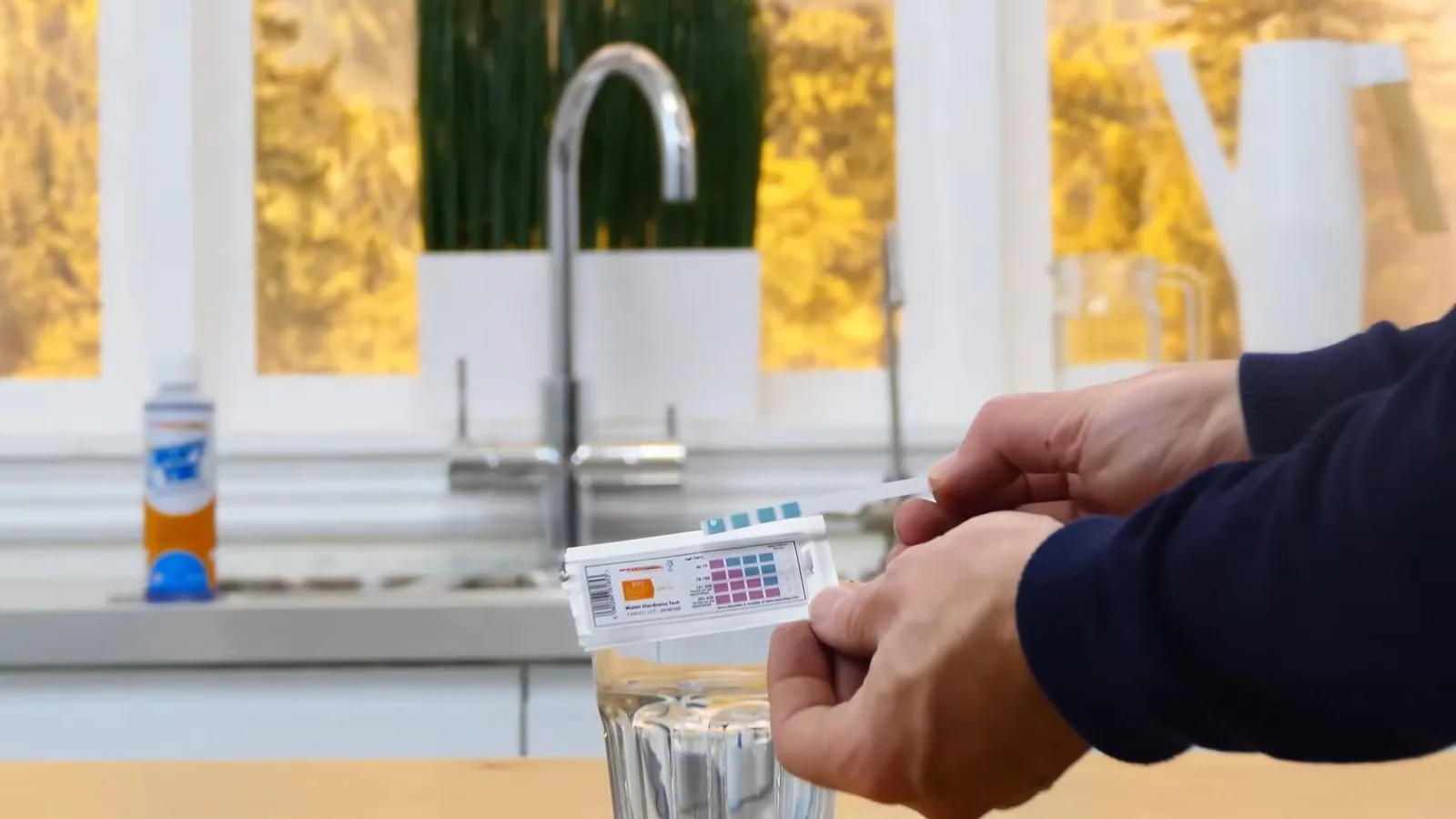
- Look for the signs: white or chalky crust at faucets and showerheads, spots on glassware, dry skin after a shower, or soap that lathers poorly.
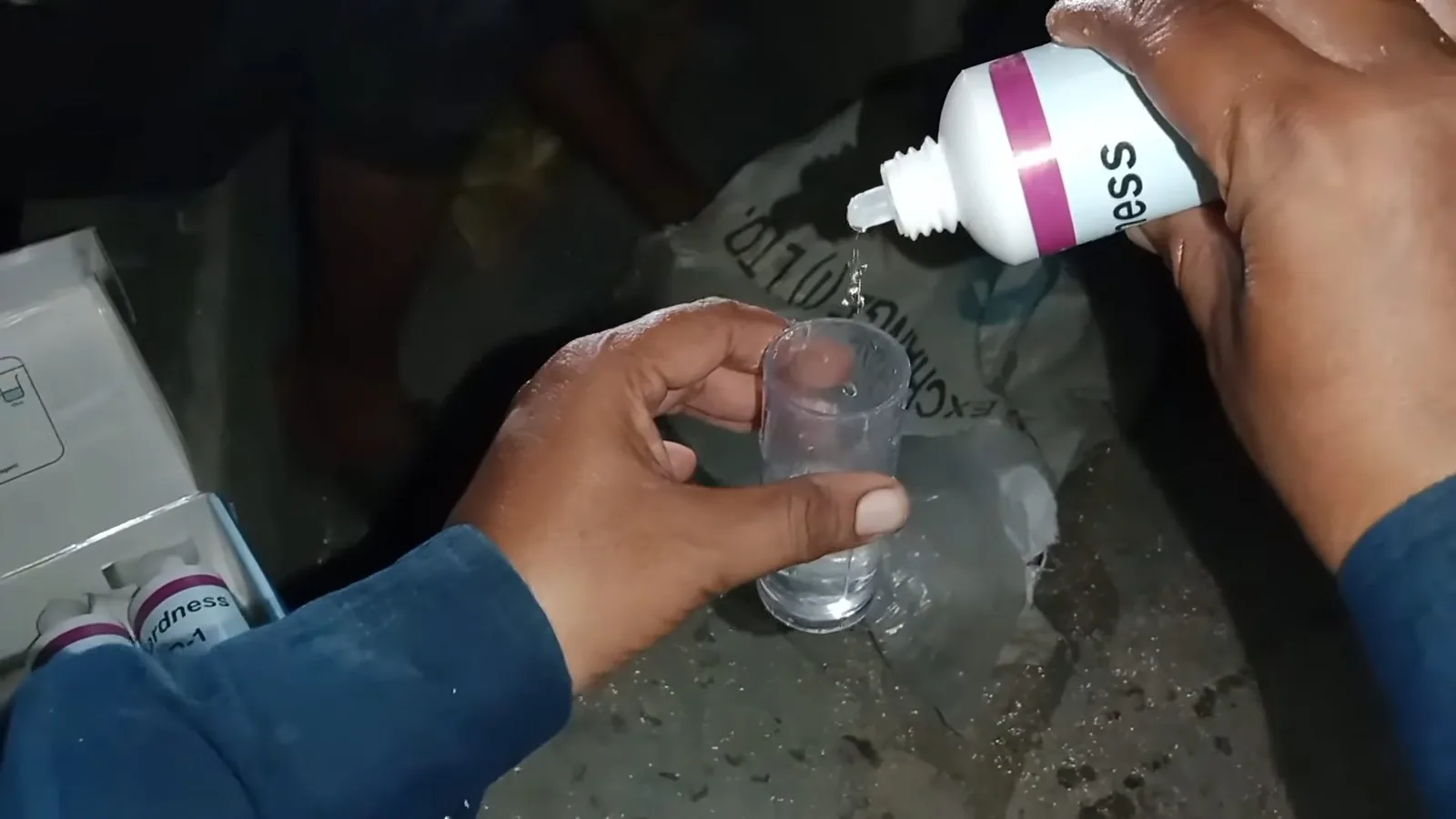
- Ask for a hardness test at your tap. Hardware stores sell test strips, and a plumber can test with a proper kit.
- Ask for the result in writing, with the units. Different reports use different units, so the unit matters as much as the number.
- Test a second tap, such as an outdoor faucet. The water should read the same, and a different result points to treatment already in place.
- Read the city's water quality report, which is published for each year, and compare it with your own result.
Do not buy equipment before you have the number. A plumber who sells without testing is selling a system, not a result.
Softener, filter or both: what each piece of equipment does
People often use the word softener for any treatment, and the equipment does different jobs. Match the problem to the tool before you ask for a quote.
| Equipment | What it does | Used for | Limit |
|---|---|---|---|
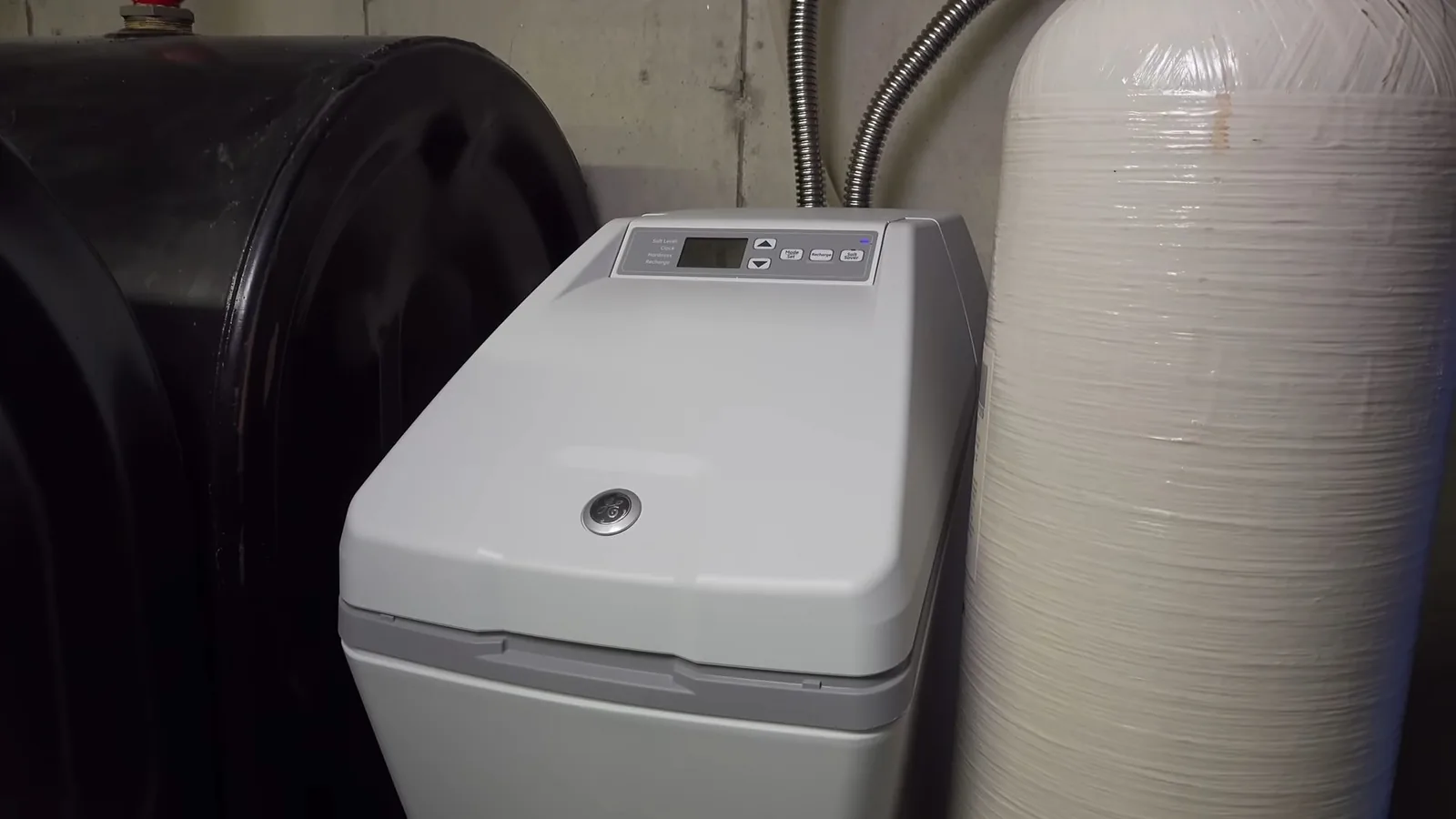
| Water softener | Swaps the minerals that form scale for a different one, using salt to refresh the resin | Scale on fixtures, spots, soap that will not lather | It does not filter or disinfect |
| Sediment filter | Catches grit and particles | Cloudy or gritty water | It does not soften water |
| Carbon filter | Reduces some tastes and odors | A chlorine taste or smell | It does not soften water |
| Reverse osmosis at one tap | Filters drinking water through a membrane | Drinking and cooking water at one sink | It treats one tap, not the house |
Whole-home filtration is a large category, and the right system depends on what is in your water. A plumber should be able to say which contaminant or problem each piece addresses, in plain words.
Installation: six items for the quote
An installation touches the water supply, a power outlet and a drain. Ask each plumber to write down the same points.
- The hardness result, and the capacity the unit is sized for.
- The location, with room for the tank, access to power and a drain for the discharge.
- A bypass valve, so that you can isolate the unit for service without shutting off the house.
- The drain line, where the unit sends its rinse water, and how it connects without a siphon risk.
- The salt type and how the tank is filled, since a heavy bag in a tight spot becomes a chore.
- Service terms, including who services it, what is covered and what the warranty requires.
The rinse water from a softener goes to a drain, and local rules may apply to where it goes. The city's permit office lists plumbing among its permit types and does not publish a softener rule, so ask the plumber whether a permit applies.
When a softener stops working: salt, crust, drain and control
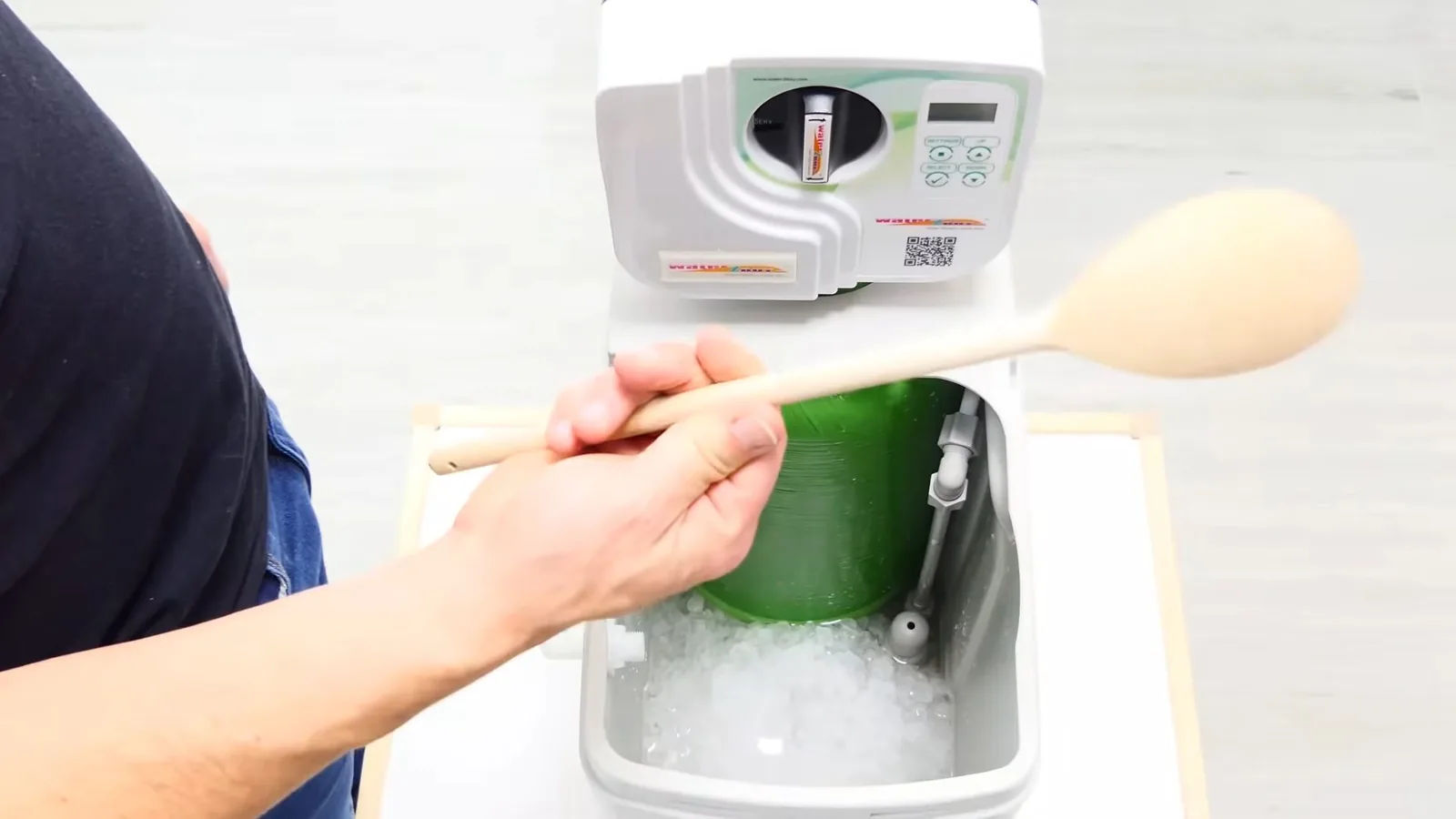
Softeners fail in ordinary ways. The most common is an empty salt tank. Next is a salt bridge, a hard crust that forms above the water so the salt no longer dissolves. A clogged drain line, a worn resin bed and a control valve that lost its program also appear.
Check the salt level first and break up a crust with a broom handle if you find one. If the water is hard again after the tank is refilled and the unit has run a cycle, call. Ask the plumber to test the water before and after, so that you can see the difference.
A boil water notice: what a softener does not do
A boil water notice followed a pipeline leak in July 2024, as reported by KETR. A softener changes the minerals in water and does nothing to make it safe. A filter that is not rated for the purpose does not either.
During any notice, follow the city's instructions for drinking, cooking and brushing teeth. Afterward, ask the equipment maker whether filter cartridges or a sanitizing step are recommended. Do not assume the system is safe to ignore just because it has a tank.
Water treatment questions Greenville homeowners ask
Does Greenville water need a softener?
No figure for the whole city would describe the water at your tap. Ask the plumber for a hardness test at your house and a written result. If scale on fixtures and spots on glass are not bothering you, you may not need one.
Does a softener make water safe to drink?
No. A softener swaps minerals that cause scale for a different one. It does not disinfect or filter the water. During a boil water notice, follow the city's instructions and do not count on a softener or a filter.
Why is my softener not working?
The common causes are an empty salt tank, salt that has formed a hard crust, a clogged drain line or a control that lost its settings after a power outage. Check the salt first, and call if the water is hard again after refilling.
Scale, spots or dry skin? Ask for a test before a sale
Call, describe what you are seeing, and the person who answers will arrange a plumber for your area. Ask for a hardness test first.