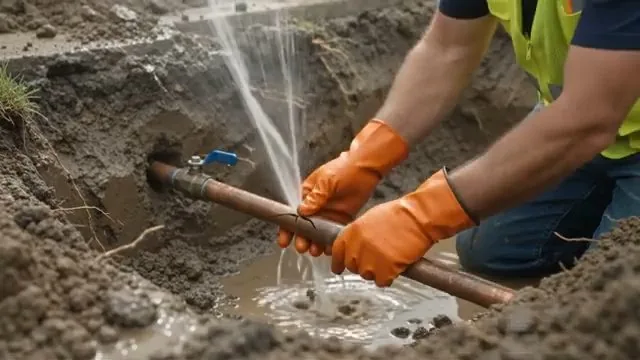
Burst pipe repair · Greenville, TX
Burst Pipe Repair in Greenville, TX: Stop the Water First, Then Choose the Fix
A pipe has split and water is pouring into a wall, a ceiling or the crawlspace. Every minute counts, and the first few steps are yours to take safely. This page covers those steps, how a plumber decides what to repair, and what to document before cleanup starts.
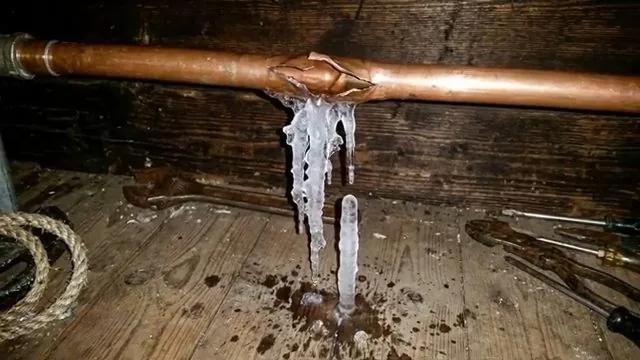
The first ten minutes: stop it, drain it, make it safe
- Close the main valve on the house, where the water line enters. A round handle turns clockwise. A lever handle turns a quarter turn so it sits across the pipe.
- Open the lowest faucet in the house to drain the lines, then the highest so air can get in. Flush each toilet once to empty its tank.
- If water is near outlets, a panel or an appliance, shut off power at the breaker only if you can reach it without stepping through water. If you cannot, stay out and call 911.
- Turn off the water heater at its breaker or gas control. A tank with no incoming water can overheat.
- Photograph the break, the water and anything damaged, then move furniture and belongings out of the water's path.
A ceiling that bulges with water can give way without warning. Keep people and pets out from under it, and tell the plumber about it when you call.
Use the valve on your house, not the one at the street meter. The meter and the valve beside it are normally part of the city's system. If your own valve will not turn, call the City of Greenville's general line at (903) 457-3100 and say that a line is flowing.
Burst, frozen or a failed fitting: what the plumber is looking at
The cause matters because it points to what else might fail. A split from freezing usually means the same exposure will hit again. A failed fitting is a single point of failure.
| What you see | Likely cause | What the repair usually is |
|---|---|---|
| A split along a length of pipe, often with ice nearby | Water froze and expanded inside the pipe | Thaw the line, then replace the split section |
| Spray or a steady drip at a joint or fitting | A failed connection or a worn fitting, not a burst pipe | Re-make the joint or replace the fitting |
| A pinhole with green or white crust on copper | Corrosion through the pipe wall | Cut out and replace the section, and check the pipe nearby |
| Water at a washing machine or sink supply line | A braided hose or a stop valve that has failed | Replace the hose or valve, often a small repair |
| Water coming through a ceiling with no fixture above it | A split in an attic or wall line | Follow the water back, open an access point and repair |
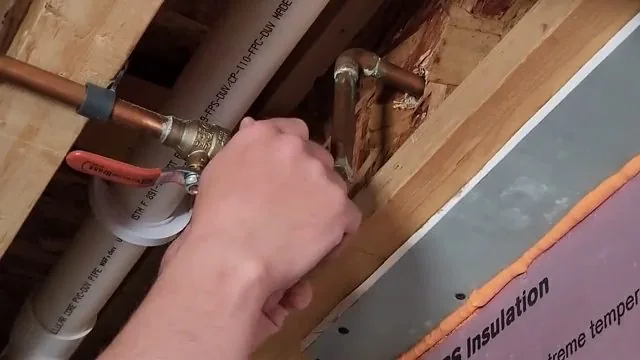
Frozen pipe: thaw first, or cut first?
If a pipe has frozen but not yet split, open the nearest faucet so water can escape as it thaws, and warm the pipe slowly. A hair dryer on low, moved along the pipe from the faucet end, is safe. A torch or open flame is not, because it can start a fire inside a wall.
If a pipe has already split, water will start flowing as the ice melts. Close the main valve before you thaw anything, so the break does not become a flood.
The usual victims are pipes in unheated spaces: an attic, a garage wall, a crawlspace or an exterior wall. After the repair, ask the plumber whether insulating that run or rerouting it would keep the problem from coming back.
Water off for everyone on the street, or just you?
A burst pipe in your house floods the house. A break in the street usually does the opposite, dropping pressure or shutting the water off. In July 2024 a main under Washington Street broke and Greenville issued a boil water notice that lasted until July 8. In September 2023 two main breaks left parts of northeast Greenville without water for about two days, according to local radio coverage. In both cases the cause was the city's main, not household pipes.
Ask a neighbor, look for a notice from the city and read your meter. If your water is gone and the meter is still, the break is probably outside your house. If you can see water where it should not be, the break is yours.
Repair a section, replace a run or open the wall?
A burst pipe has one break, but the pipe around it may not be sound. The plumber's first job is to see how far the damage goes. Before work begins, ask:
- How much pipe will be removed, and where the cuts will be.
- What the new pipe is made of and how it joins the old pipe. Two different metals joined directly can corrode, and a proper transition fitting prevents that.
- Which walls, ceilings or floors will be opened, and who closes and paints them.
- Whether the rest of that run was checked, since a pipe that split once may be thin elsewhere.
- Whether the repair needs a city permit, and who pulls it.
If a second line has failed, or the pipe looks worn along its length, it may be time to compare another repair with a whole-house repipe. If you are unsure where the water is coming from, leak detection in Greenville finds the source before any wall is opened.
Permits, registration and the 811 call
The City of Greenville lists plumbing among the permit types its Permits and Inspections office handles, and it has a repair permit application, but it does not say which plumbing repairs are exempt. Ask the plumber whether a permit applies and who will pull it, or call the office at (903) 457-3100. Contractors register with that office.
If the break is in a buried line, call Texas811 at least two business days before any digging. Homeowners are included.
After the water stops: drying, photos and what comes next
Water that has soaked drywall, insulation or flooring has to come out or dry quickly. Drying out the house explains what that work includes and what it does not.
Keep a record for your insurer: photos before cleanup, the plumber's written description of what failed and the receipts. Do not throw out damaged materials until your insurer has had a chance to see them, unless they are a safety hazard.
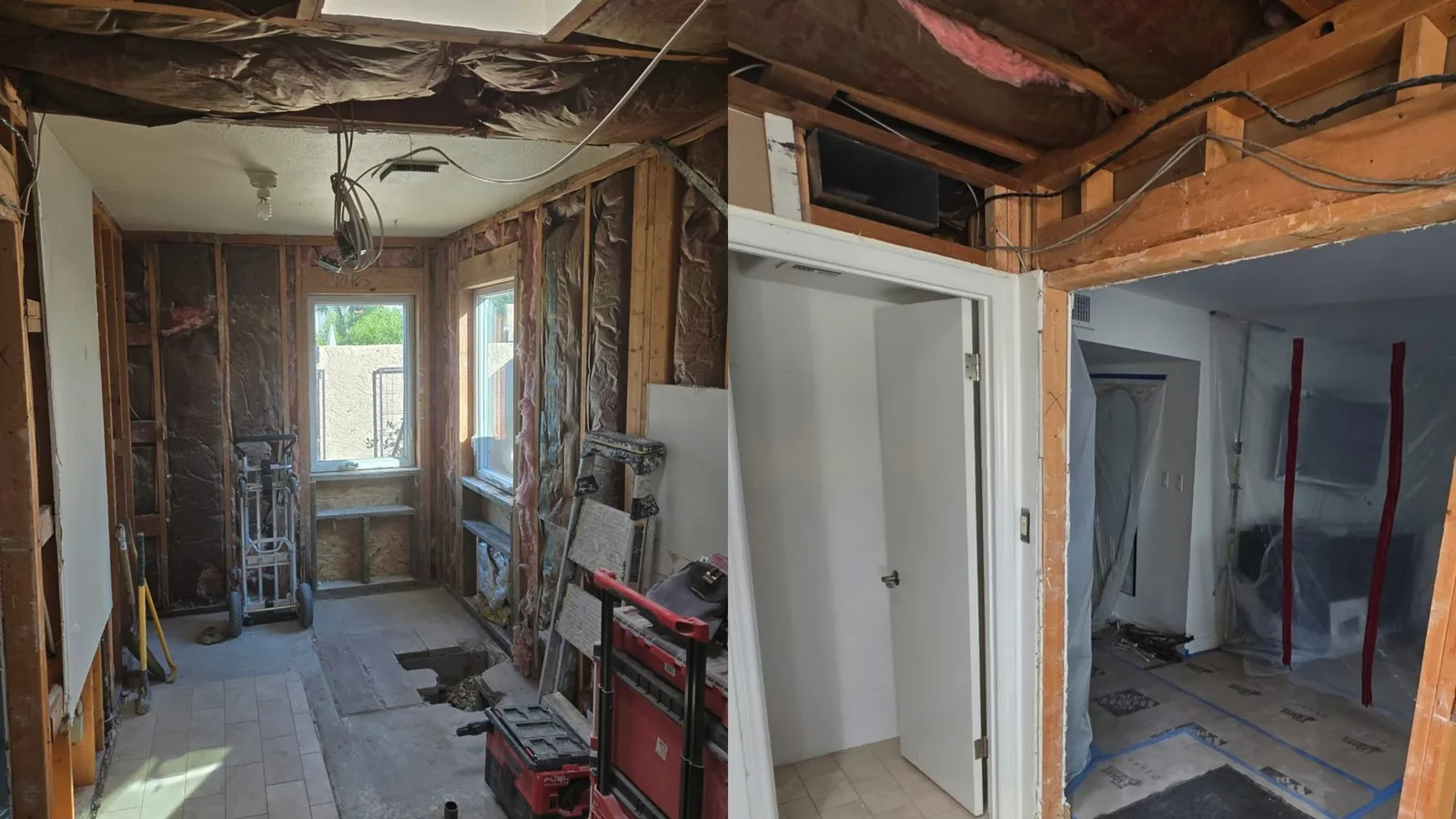
Water already stopped, or still running? Call a plumber now
Call, describe where the pipe split and whether the main valve is closed, and the person who answers will arrange a plumber for your area. A call puts you on a plumber's schedule and does not promise an arrival time. If a pipe has been leaking slowly for a while, a leak under the floor slab may be the better match.