Water heater installation · Greenville, TX
Water Heater Installation in Greenville, TX: Replace the Tank, Choose a Type and Know What the Quote Covers
The old tank is leaking, or it is old enough that you would rather choose its replacement than have it chosen for you. The choices that matter are the fuel type, the size and what the quote includes. This page walks through each one, in the order a plumber will ask.
Gas, electric or hybrid heat pump: which type fits your house
Most replacements keep the same fuel type, because the gas line, the vent or the circuit is already there. Changing it is possible, and it changes the quote. This is how the three common options compare.
| Type | What it needs | What to ask | Usually fits |
|---|---|---|---|
| Gas tank | A gas line, a flue to the outside and a clear space for combustion air | Venting and gas connection details, plus the smell-of-gas safety plan | A house that already has gas and a vent in place |
| Electric tank | A dedicated circuit of the right size and a clear spot with floor drainage | Whether the panel has room for the circuit | A house without gas, or an interior closet with no vent path |
| Hybrid heat pump | A circuit, a condensate drain and open air space around the unit | It cools the air nearby and needs room, so a tight closet can be a poor fit | A house with an open garage or utility room that suits the unit |
A plumber who sees your closet or garage can say which of these will work. Photos help when you call, and they let the first conversation be about your house instead of a general list.
Sizing a water heater: first-hour rating and the morning rush
A heater that is too small runs out when two showers and a dishwasher overlap. One that is too large costs more to buy and more to keep hot. The number that predicts the answer is not the tank size alone but how much hot water the unit delivers in its first hour.
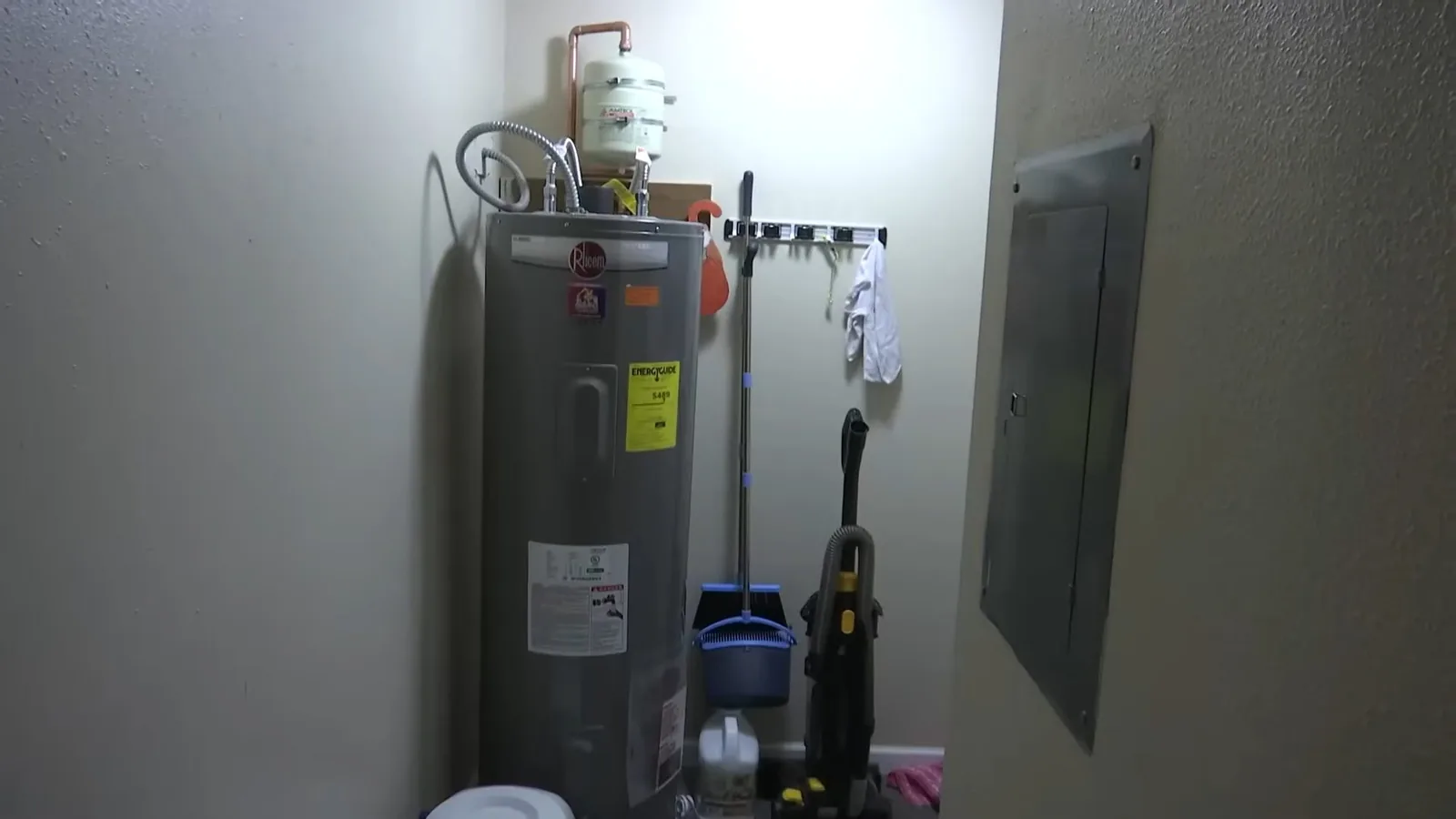
That first-hour rating is printed on the yellow EnergyGuide label on most tank models. Compare it with how your household actually uses hot water at the busiest hour of the day, and ask the plumber to do the same. If the old tank always ran short, say so, because a like-for-like swap would repeat the problem.
Tell the plumber about changes too: a new soaking tub, more people in the house or a guest suite. Size for the household you will have, not the one the old tank was bought for.
Installation day, step by step
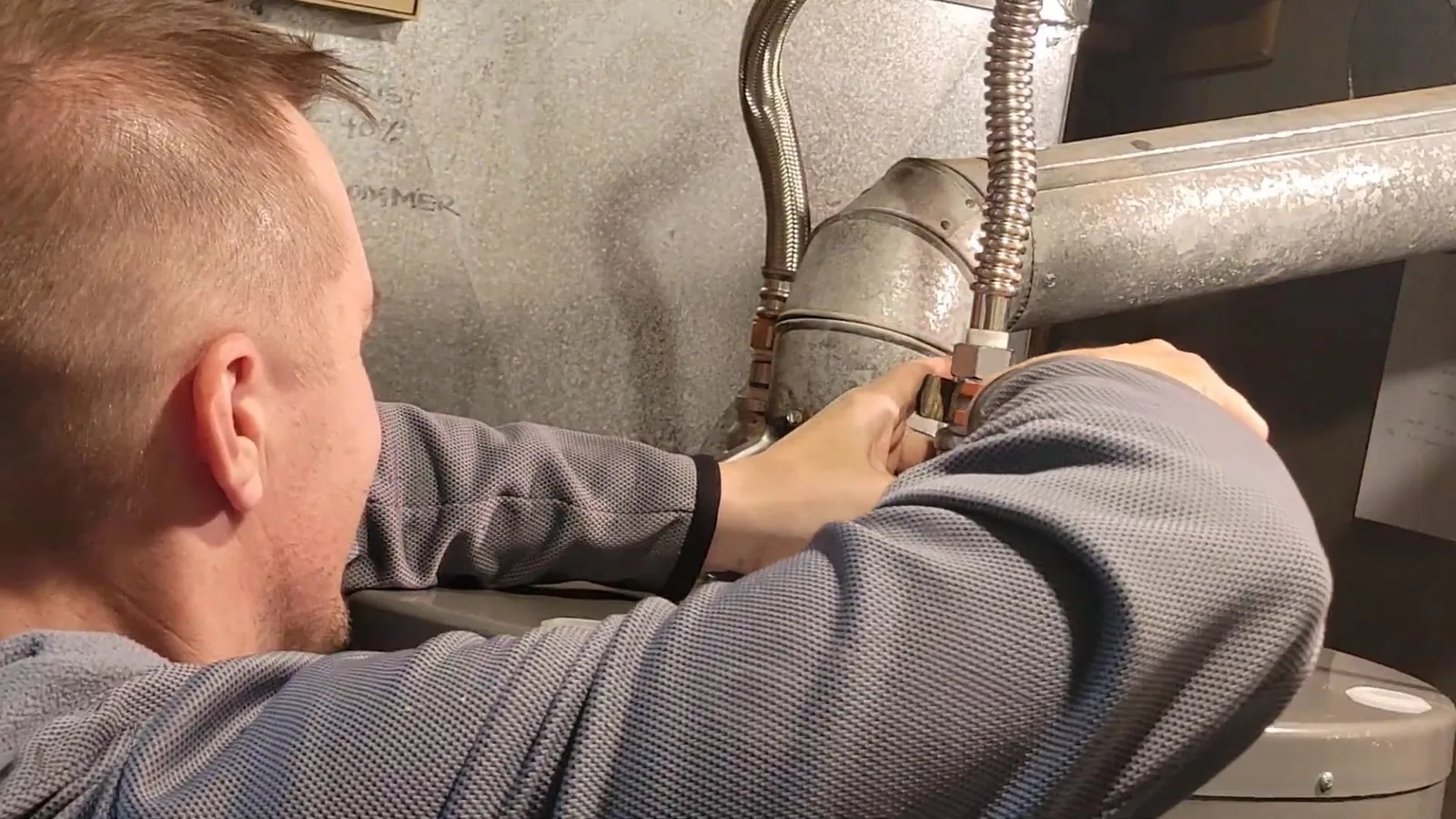
- The plumber shuts off the water and the fuel, then drains the old tank to a safe spot.
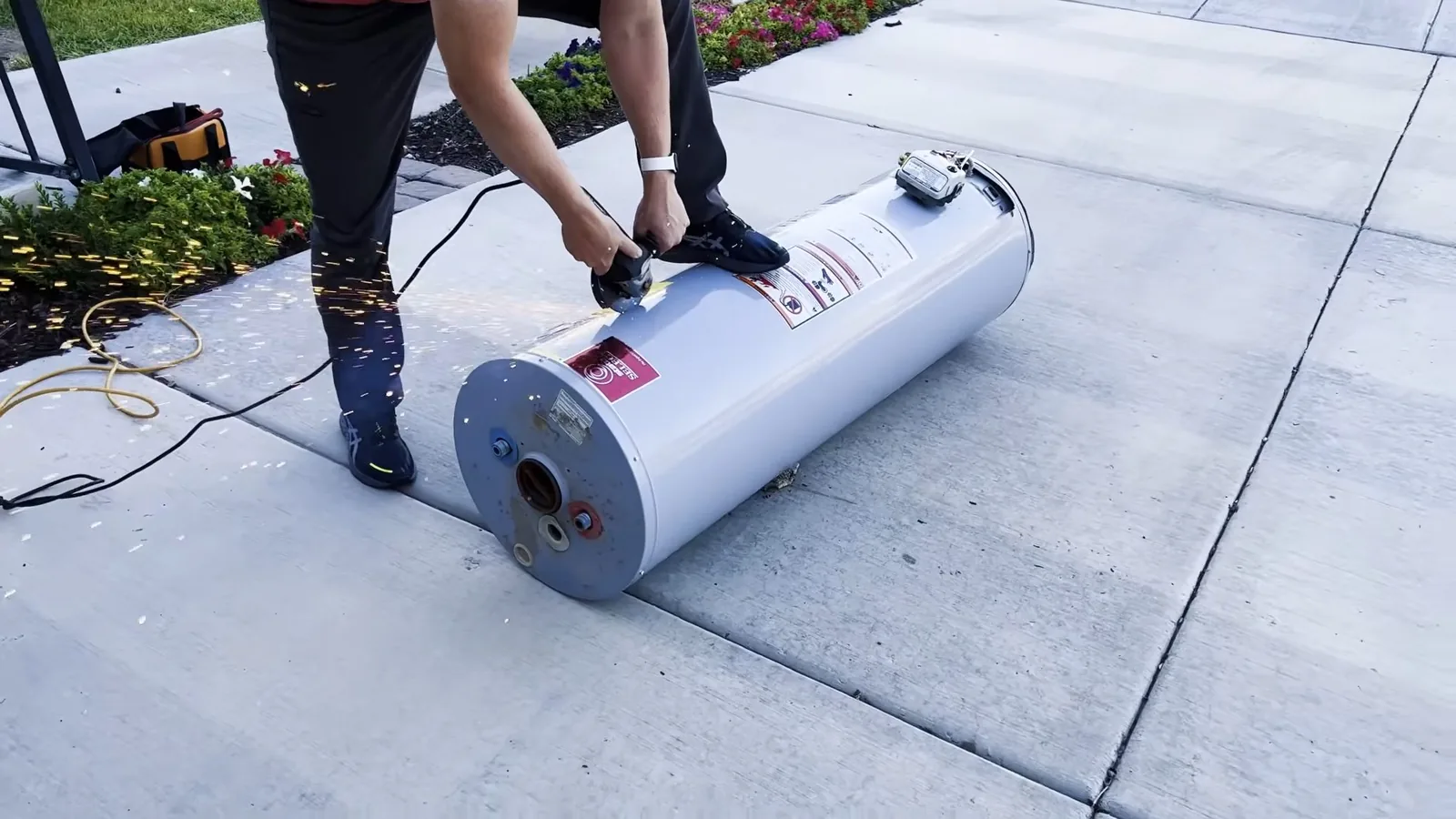
- The old heater is disconnected, removed and hauled away. Ask whether that is in the quote.
- The new heater is set on a drain pan or the existing pan, with a drain line to a safe place.
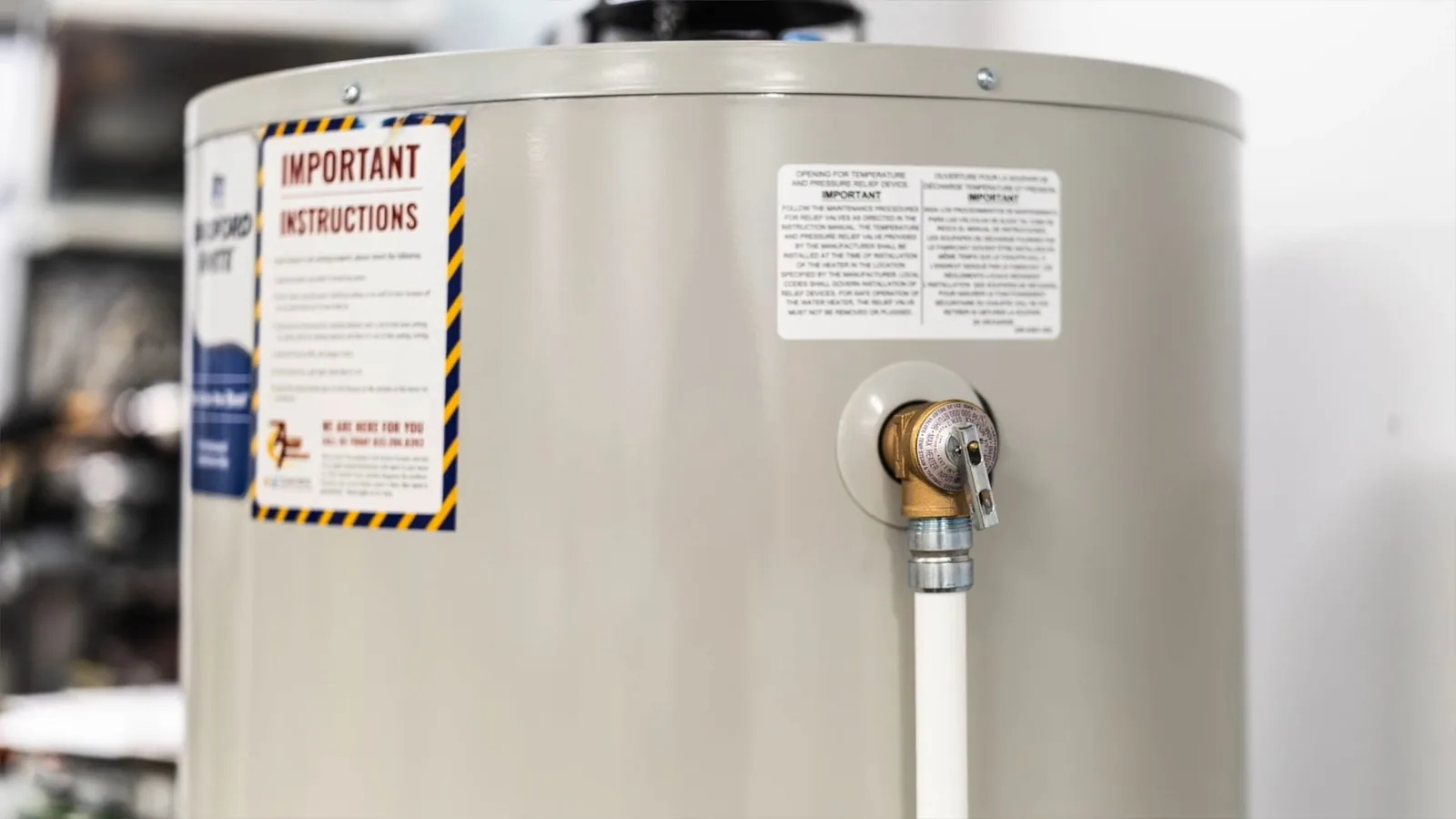
- New supply connectors and shutoff valves go on, and the relief valve gets a discharge pipe that ends where escaping hot water cannot hurt anyone.
- Gas units get a flue and a gas connection that is tested for leaks. Electric units get a circuit, checked and connected.
- The tank is filled and the air is bled out before the fuel is turned on.
- The plumber tests the burner or elements, checks the vent, and shows you the shutoff valves and the controls.
Ask the plumber to show you the shutoff valves and the controls before they leave. In a hurry, that step is the easiest one to skip, and it is the one you will want the next time something drips at night.
Eight lines every installation quote should list
Two quotes for the same job can differ widely because one leaves items out. Ask each plumber to write down the same list, then compare line by line.
- The unit, by make, model, fuel type and size, not just 'a 50-gallon heater'.
- Removal and disposal of the old tank.
- New supply connectors and shutoff valves, and any corroded fittings that will be replaced.
- The relief valve and its discharge pipe, and the drain pan beneath the tank.
- Venting or electrical work. Gas units may need new vent pieces. Electric units may need a new circuit.
- An expansion tank, if your setup needs one, with the reason written down.
- The permit, if one applies, and who is responsible for getting it.
- Warranty terms, split into the manufacturer's coverage for the tank and the plumber's coverage for the labor.
If a line is missing, ask whether it is not needed or just not included. The answer tells you whether the quote is complete.
Why a plumber asks about water pressure and an expansion tank
Water that is heated expands. In a house with a one-way valve or a pressure reducing valve on the supply, that extra volume has nowhere to go, and pressure in the pipes climbs. An expansion tank gives the water room to expand.
Not every house needs one, and nobody should add one by habit. Ask the plumber whether your supply has a one-way valve, what the water pressure reads at a tap, and why an expansion tank is or is not in the quote. A dripping relief valve after the install is a reason to call back and ask about it.
Permit and registration: confirm before the old tank comes out
The City of Greenville lists plumbing among the permit types its Permits and Inspections office handles, and a master contractor registers with that office by providing a copy of the master license, an ID and liability insurance naming the city as certificate holder.
The city's published page does not say whether a water heater replacement needs a permit, so this page does not claim one. Ask the plumber whether a permit applies and who pulls it, and call the city at (903) 457-3100 if you want it confirmed. Ask whether the plumber is registered, and check the Texas license on the state board's public license search.
Signs the tank is finished, and when to look at other options
A tank that leaks through its body is finished, and a tank with rust, a failing anode and a leaking valve may be close. A tank with one failed part may be worth repairing. Ask the plumber to read the date code on the data plate and to show you where the leak starts.
The page on repairing a tank water heater covers the symptoms and the questions to ask. If you are considering a different kind of heater, tankless water heater options compares what changes in the house.
Two warranties, two promises: the tank and the labor
A warranty has two parts. The manufacturer usually covers the tank and parts for a stated period, and the plumber covers the labor. They are separate promises, and each should be written down.
Ask for both in writing and ask what voids them. Common conditions include using the unit as listed, keeping the relief valve working and registering the product if the maker asks. Keep the paperwork and the data plate photo together.
Replacement questions Greenville homeowners ask
Do I need a permit to replace a water heater in Greenville?
The city lists plumbing among the permit types its Permits and Inspections office handles, but its published page does not name water heaters. Ask the plumber whether the job needs a permit and who pulls it, or call the city at (903) 457-3100 to confirm before work starts.
How long does a replacement take?
A like-for-like swap in the same spot is often a half-day job. Changing fuel type, moving the heater, adding a vent or running a new circuit adds time. Ask for the expected window in the quote, along with how long you will be without hot water.
Can I switch to a tankless heater instead of a tank?
Often yes, but it changes the gas line, the vent or the electrical service, so the quote grows beyond the unit itself. The page on tankless water heaters lists what a swap involves and who it suits.
Ready to compare quotes? Start with a call
Call, say whether the heater is gas or electric and how big it is now, and the person who answers will arrange a plumber for your area. For rough numbers before you call, see replacement cost ranges.