Toilet repair and installation · Greenville, TX
Toilet Repair and Installation in Greenville, TX: Running on Its Own, Rocking at the Base or Clogged Again
A toilet that runs by itself, rocks when you sit, or clogs every week wastes water and patience. Most of these have a simple cause once you know where to look. This page covers the checks, the clog steps that are safe, and what to ask when a new toilet is the better answer.
A running toilet: the ten-minute dye test
A toilet that runs, even a little, wastes water all day and night and is the most common silent leak in a house. This test takes ten minutes and costs a few drops of dye.
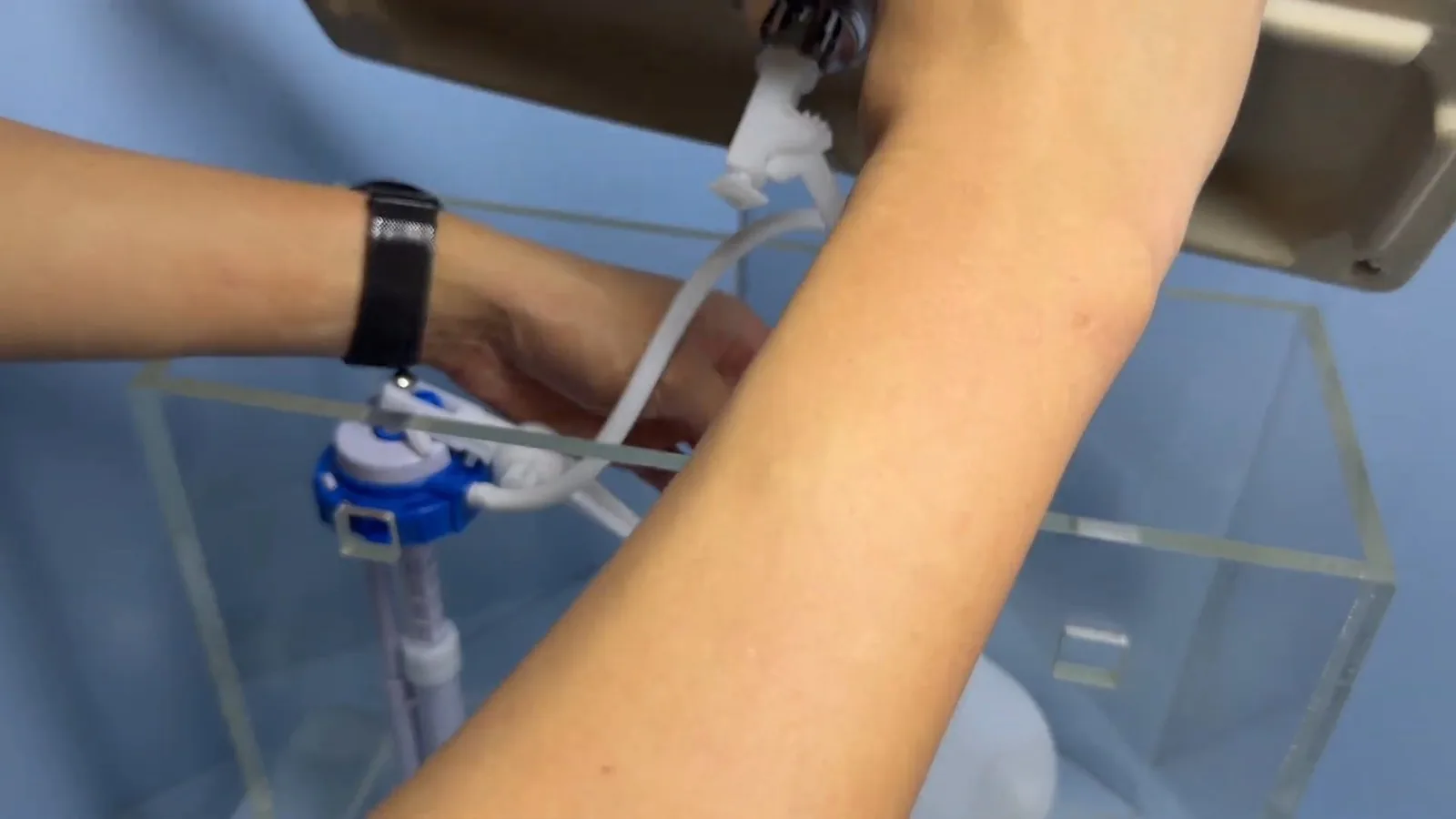
- Take the lid off the tank and look at the water level. It should sit below the top of the overflow tube. If it spills into the tube, the fill valve or float is set too high.
- Put a few drops of food coloring in the tank. Do not flush.
- Wait ten minutes, then look in the bowl. Color in the bowl means the flapper is leaking.
- Check the flapper chain. If it is too tight, the flapper cannot close fully, and if it is too slack it can catch.
- If the flapper looks soft, warped or coated with mineral deposits, replace it. The part is common and a match is easy to find with the model name in the tank.
- If the toilet still runs after the flapper is replaced, the fill valve is the next suspect.
A water bill that rose without explanation is a reason to run this test first. If the dye stays in the tank and the meter still moves, the leak is elsewhere, and the meter test for hidden leaks is the next step.
Symptom to cause: leaks, rocking and weak flushes
The sign tells you the part. Use the table to decide whether the fix is a small part, a seal or a call.
| What you notice | Likely cause | First move |
|---|---|---|
| Runs for a few seconds every so often | A leaking flapper | Dye test; replace the flapper |
| Hisses or keeps filling | A worn fill valve or a float set too high | Adjust the float; replace the valve if needed |
| Weak flush or an incomplete flush | Clogged rim holes, a low tank level or a partial clog | Check the tank level and clear the rim holes |
| Rocks when you sit or shifts at the base | Loose closet bolts or a failed wax seal | Stop using it if water shows at the base; call |
| Water pooled around the base | A failed wax seal, a cracked tank or a loose supply | Dry it, then trace the first drop; call |
| Moisture outside the tank on a humid day | Condensation, not a leak | Dry the tank and check whether it returns |
| A new toilet that will not flush well | A bad fit, a wrong rough-in or a vent problem | Ask the plumber to check the installation |
Clogged toilet: what to try, and when the clog is deeper
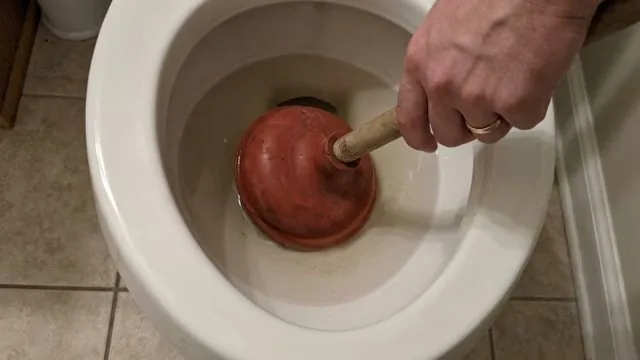
A flange plunger, with the extra rubber lip that fits the drain, works better on a toilet than the flat cup type. Cover the drain completely and push and pull firmly several times without lifting the cup. Add water only if the bowl is nearly empty.
If the bowl rises toward the rim, stop adding water and do not flush again. If the toilet clogs repeatedly, or if the tub or shower nearby gurgles, the problem may be farther down the line. Then when every drain is slow is the page to read, and main line backups covers a sewage backup that reaches the floor.
An overflow onto the floor needs fast cleanup because the water may be contaminated. cleanup after an overflow explains the steps.
Rocking or leaking at the base: seal, flange and floor
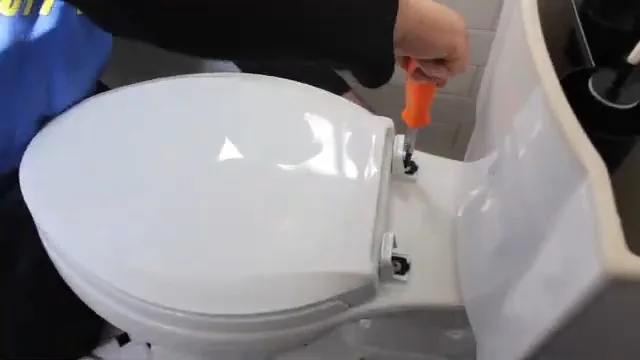
A toilet that rocks or leaks at the base needs the toilet lifted and the wax seal replaced. Water that has seeped under the toilet can rot the floor, so the plumber should check the subfloor and the flange, which is the ring on the floor that holds the toilet.
Ask whether the flange is intact and level. A cracked or low flange can cause the seal to fail again. The quote should say what the plumber will repair, what they will only check and who deals with a damaged floor.
Installing a new toilet: six things to settle
A new toilet is a simple swap if the new one fits the old footprint. It is a larger job if the toilet is being moved. Settle these points with the plumber first.
- The rough-in distance. Measure from the wall to the center of the floor flange. A toilet that does not match will not fit.
- The bowl shape. Round bowls take less space, and elongated bowls are often more comfortable.
- The flush type. Single flush, dual flush or pressure-assisted. Ask about noise and how the model clears waste.
- Height and clearance. Check the space beside and in front of the toilet, and any ADA need in the household.
- The wax or waxless seal, the supply line and the shutoff valve, listed in the quote.
- Disposal of the old toilet and the permit question, if the toilet is being moved.
Relocating a toilet changes the drain and the vent, so ask whether a permit applies. The city lists plumbing among its permit types and does not publish a rule about toilet moves, so ask the plumber, or call (903) 457-3100.
Repair the parts or buy a new toilet?
A toilet that runs wastes water, but a toilet that is just old is not necessarily failing. Replacing parts is cheaper than replacing the toilet when the porcelain is sound. Replacement makes sense for a cracked bowl, a persistent leak at a crack, repeated clogs from a poor design, or a wish for a different height or flush type.
Ask for the repair option and the replacement option together. The page on typical pricing, toilet price ranges, gives wide ranges for both.
Toilet questions Greenville homeowners ask
Why does my toilet run on its own?
Usually the flapper at the bottom of the tank no longer seals, so water leaks into the bowl and the tank refills every so often. A worn fill valve or a float set too high can also keep it running. The dye test described above tells you which one before you buy a part.
Is it normal for a toilet to rock a little?
No. A toilet that moves at the base has a loose connection to the floor, and the wax seal beneath it may be leaking onto the subfloor. Stop using it if you see water at the base, and have a plumber check the floor before the repair.
When should I stop plunging and call?
Stop when the bowl rises toward the rim and does not drain after a few firm strokes, when water backs up in a nearby tub or shower, or when you plunge repeatedly and the clog returns. Those signs point to a blockage deeper in the line.
Running, rocking or clogged? Describe it to a plumber
Call, say what the toilet is doing and whether water shows on the floor, and the person who answers will arrange a plumber for your area.