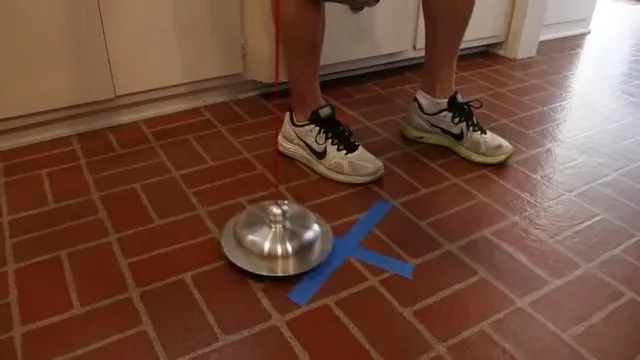
Leak detection · Greenville, TX
Leak Detection in Greenville, TX: Meter Running, Bill Up, No Wet Spot to Show for It
Your water bill jumped, or the dial on the meter keeps turning while nobody is using water, and you cannot find a wet spot anywhere. A leak you cannot see still costs money every day. This page shows how to confirm a leak, narrow down where it is, and what a good leak assessment should leave in your hands.
Is it really a leak? Read the meter before you pay anyone to look
A high bill alone does not prove a leak. A pool, extra people at home or a long stretch of hot weather can do the same. The meter settles it, because it counts every gallon that passes whether you use it or not.
- Turn off everything that uses water: taps, dishwasher, washing machine, ice maker, sprinkler timer and any humidifier. Nobody flushes.
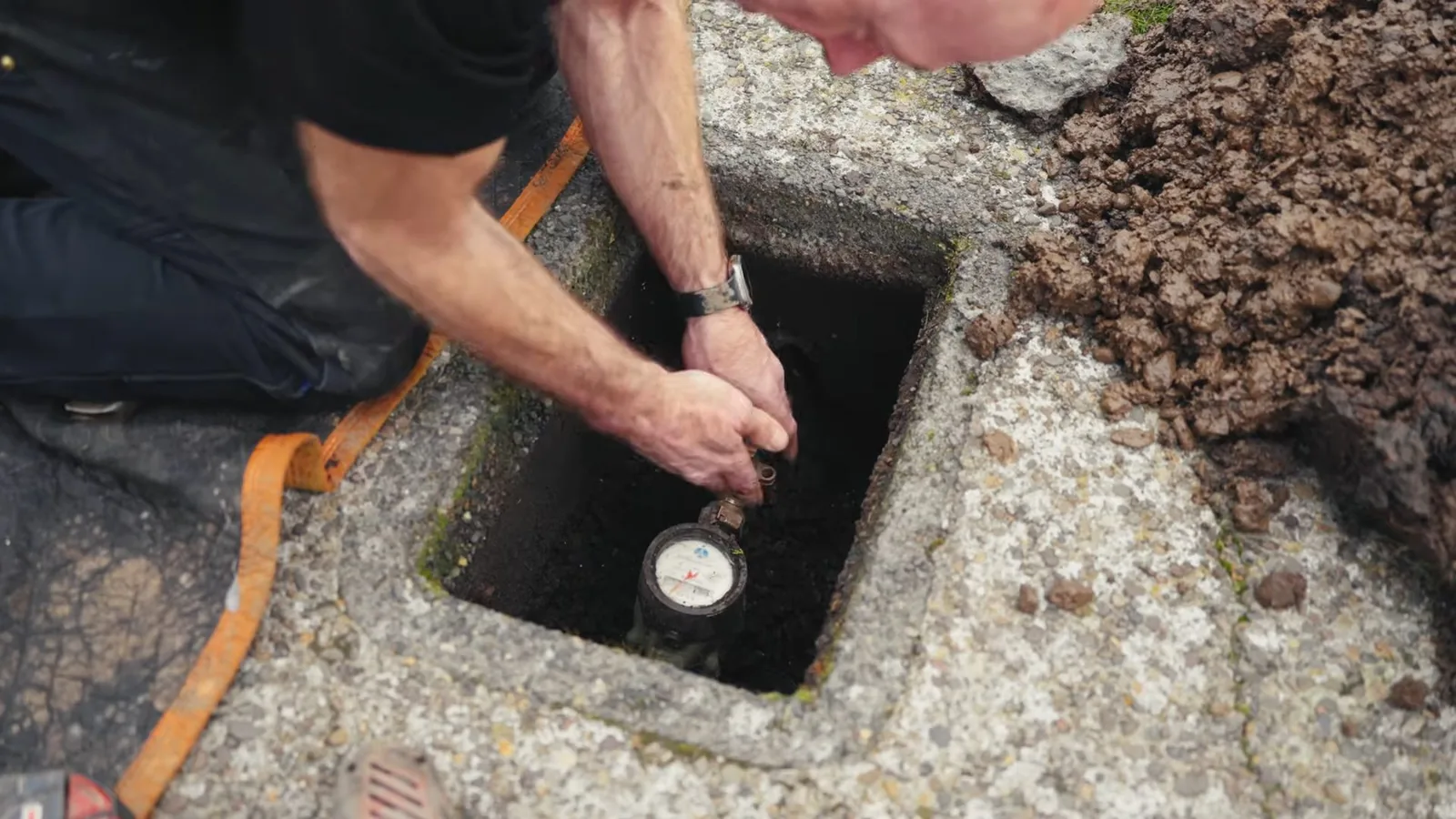
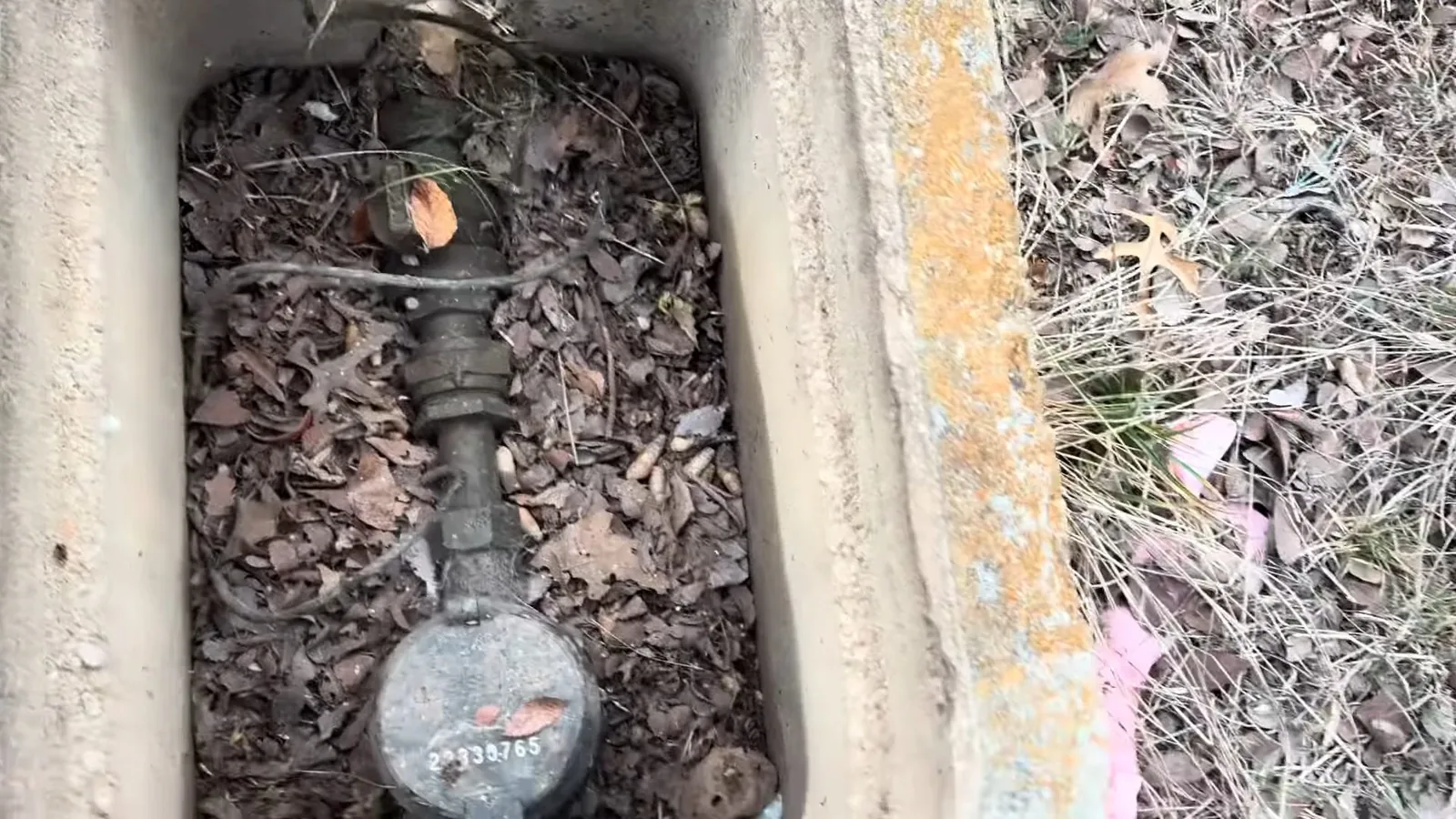
- Find the water meter. In many neighborhoods it sits in a ground-level box near the curb. Lift the lid with a screwdriver, and look before you reach in, because insects like those boxes.
- Look at the small dial or triangle on the face of the meter. Most meters have a leak indicator that spins when any water at all is moving. If it turns with everything off, water is going somewhere.
- Write down the numbers on the register, wait thirty minutes with no water use, then read it again. Any change confirms a leak.
- Now close the main valve on your house, usually near where the line enters the home, and check the dial once more. If it stops, the leak is inside the house or past the valve. If it keeps turning, the leak is on the buried line between the meter and the house.
That last step tells you where to look first, and it tells a plumber where to start. A still dial is not an all-clear, though. A toilet flapper that seeps now and then, or a hot-water line that leaks only when the heater cycles, can slip past a thirty-minute test.
Toilets are the easy check. Put a few drops of food coloring in each tank, wait ten minutes without flushing, and look in the bowl. Color in the bowl means a worn flapper, which is usually a small job. See fixing a running toilet if you find one.
If pressure fell or the water went out entirely, look at the city before the pipes. A main under Washington Street failed in July 2024 and led to a boil water notice, and two main breaks in September 2023 left parts of northeast Greenville without water for about two days. A break in the street is the city's to fix. Check the city's notices and ask a neighbor before you book a leak call.
The dial is moving. Where could the water be going?
Where the leak sits decides who fixes it. The table matches what you see to the likely source and to the person who usually handles it.
| What you see | Likely source | Who usually handles it |
|---|---|---|
| Dial keeps moving with the house main closed; a soggy or unusually green strip of lawn | The buried line between the meter and the house | A plumber, after an 811 call before any digging |
| Dial stops when the main closes; hissing in a wall; a warm patch on the floor | A pressurized pipe inside the house or under the slab | A plumber |
| A ceiling stain under a bathroom that grows when someone showers | A drain, shower pan or supply line above | A plumber |
| A ceiling stain that shows up after rain and not when water is used | Roof flashing, a vent boot or a gutter | A roofer |
| A puddle in the water heater pan or at its base | The tank, a fitting or the relief valve line | A plumber |
| Water at a low spot against the foundation, or in a crawlspace, after rain | Drainage and grading more often than a pipe | A drainage or foundation contractor; a plumber if the meter test fails |
| Wet carpet at the base of an outside wall | A sprinkler line, a supply pipe or the wall itself | Depends: run the meter test with the sprinklers off |
| A pool that drops faster than evaporation explains | The shell, its plumbing or the equipment | A pool service; a plumber for the supply line |
A moving meter with a dry house also points toward the floor. A warm tile or a hissing sound lines up with a leak under the slab, which has its own repair options.
Pools, sprinklers and roofs: leaks that are not your house pipes
Some leaks are not in the pipes at all, and a few quick tests save you from paying a plumber to find a problem that belongs to someone else.
Pool or spa. A bucket test separates a leak from evaporation. Fill a bucket with water, set it on the top step, and mark the water level inside the bucket and the pool. After a day, compare. If the pool dropped more than the bucket, the pool is leaking. A pool service handles the shell and equipment, and a plumber can check the supply line.
Sprinklers. Run the meter test with the irrigation supply valve closed, then open. If the dial stops only when that valve is closed, the leak is in the system. Look in valve boxes for standing water and at heads that keep seeping after a zone shuts off. An irrigation contractor handles the system, and a plumber handles the line that feeds it.
Roof and gutters. A stain that arrives with a storm, has no fixture above it and leaves a still meter points up, not into the pipes. A roofer is the right call. If the meter still moves, you may have both problems at once.
A good leak assessment ends with these six things
Detection equipment only helps if it ends in a clear answer. Whoever you hire, ask for these before they open a wall.
- The location, marked and measured, such as a distance from a corner or a named room, not "somewhere in the kitchen wall."
- The test behind it: a pressure test of an isolated line, a meter test or a listening survey, with the result stated.
- What was ruled out, so you know which fixtures and lines are fine.
- The repair options, including what must be opened, what gets patched and who does the patching.
- Photos of the leak and of any damage, which you will want for an insurance claim.
- A written scope before any cutting. If the plan changes once a wall is open, ask for the change to be explained first.
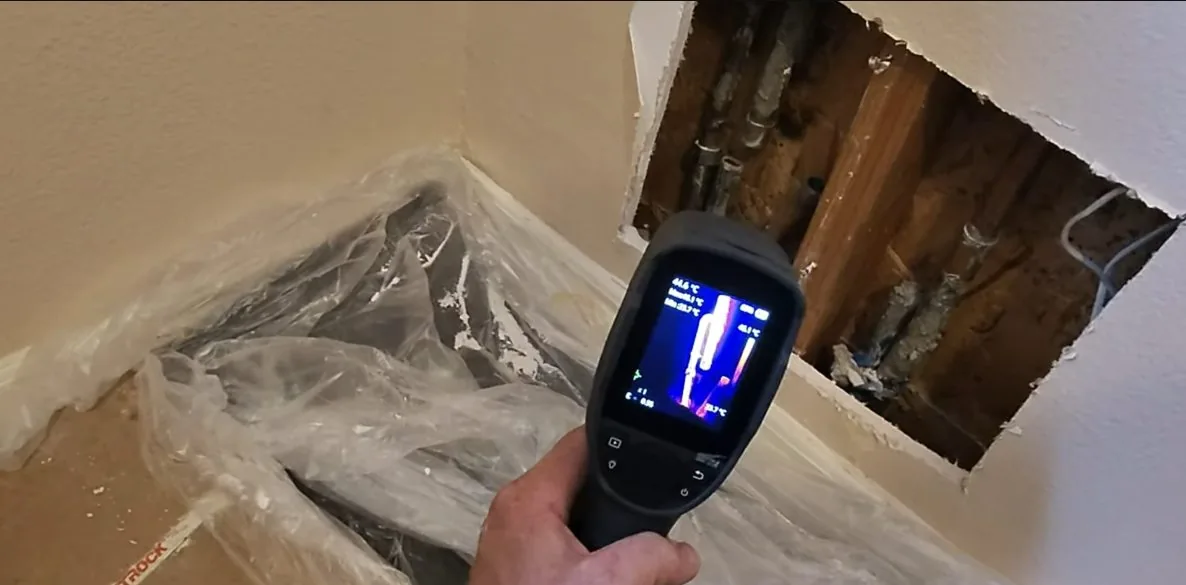
Plumbers use three main tools. Acoustic listening picks up the sound of pressurized water escaping, and it works best on quiet lines in a quiet house. Thermal imaging shows temperature differences, so it suits leaks in hot-water lines. A moisture meter reads dampness, but it shows where material is wet, not where the water started. Each has limits, which is why the pressure test matters. Ask which method found the leak.
Copper pinholes and the second leak: one repair or a pattern?
A pinhole in a copper pipe shows as a green or white crust, a damp spot or a faint hiss. One pinhole does not mean every pipe is failing. A bad joint, or a pipe that rubbed against a stud, can fail alone.
The question that matters is whether this is a one-off or a pattern. Ask the plumber what the failed section looked like and whether the pipe wall seems thin elsewhere. A second leak in the same system within a year, stains in several rooms or discolored water all point toward a pattern, and that changes the choice between patching and replacing the lines. A single leak at a single spot is usually a repair.
Digging for a buried leak: who calls 811 and whose line is it?
If the meter test points to the buried line, expect digging. Texas811 says to call at least two business days before you dig, and that includes homeowners as well as contractors. Ask the plumber who will make the call and when the dig can start, so the dates do not surprise you. See Texas811 for how the call works.
Ask the city which part of that line it maintains. The City of Greenville's general line, (903) 457-3100, can point you to the water department. Then ask the plumber's quote to say which stretch of line the repair covers.
A smell of gas is not a leak this page can help with
If you smell gas, leave the house first. Call 911 and your gas utility from outside, and do not use switches, lighters or a phone inside. Water leak tools cannot find a gas leak, and a plumber is not the first call.
Leak questions Greenville homeowners ask
How do I know if a leak is on my side of the water meter?
Turn off everything that uses water and watch the leak dial on the meter. If it keeps moving, close the main valve on your house and check again. A dial that stops means the leak is inside the house. A dial that keeps moving means the leak is on the buried line between the meter and the house. Which part of that line the city maintains is a question for the City of Greenville at (903) 457-3100.
Can a plumber find a leak without opening walls?
Often, yes. A pressure test shows which line is losing pressure, and listening equipment or thermal imaging can narrow the spot to a small area. A section of wall usually still has to open to repair the pipe, so ask for the repair plan and the patching in writing before any cutting starts.
Is a high water bill always a leak?
No. More people at home, a pool, a thirsty lawn and a hot month can all raise a bill. A meter that keeps moving with every tap and appliance off is the dependable sign of a leak.
Meter still moving? Tell a plumber what it did
Call, describe what the dial did and where the house feels warm or damp, and the person who answers will arrange a plumber for your area. If you want numbers first, see plumbing price ranges. A split pipe that is already spraying is a different job, described under when a pipe bursts.